

The Autologous Logistics Problem Nobody Wants to Talk About
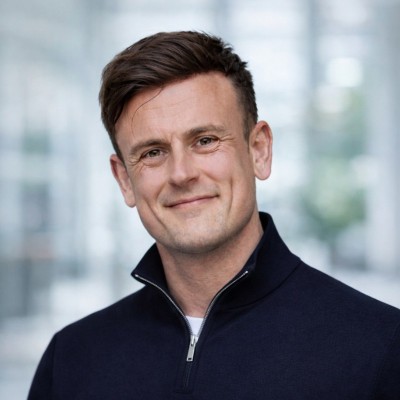
Byron Fitzgerald
Founder, ProGen Search
The science works. The manufacturing, for the most part, works. What does not work is everything that happens between the patient and the manufacturing facility.
Autologous cell therapy - where a patient's own cells are collected, shipped to a manufacturing site, engineered, expanded, and shipped back for infusion - has a logistics problem that the industry has been quietly failing to solve for years. The approved CAR-T products on the market today function despite their supply chains, not because of them. And as the number of autologous programmes in late-stage development grows, the cracks in the logistics infrastructure are becoming impossible to ignore.
This is not a manufacturing problem. It is a coordination problem, a chain-of-custody problem, and increasingly a leadership problem.
The Vein-to-Vein Reality
The vein-to-vein journey for an autologous cell therapy involves a sequence of handoffs that would be considered unacceptable in almost any other manufacturing context.
A patient's cells are collected at a clinical site via leukapheresis. The apheresis material is packaged in a cryopreserved or fresh state, depending on the product, and handed to a logistics provider for transport to the manufacturing facility. At the manufacturing site, the cells are received, inspected, processed through a multi-day or multi-week engineering and expansion protocol, and then packaged for return shipment. The finished product is shipped back to the clinical site, received, stored, and ultimately infused into the patient.
Every one of these steps involves a different organisation, a different set of SOPs, a different quality system, and frequently a different data platform. The apheresis centre operates under its own protocols. The courier operates under logistics SOPs that may or may not align with the manufacturer's requirements. The manufacturer operates under GMP. The clinical site operates under GCP. The patient's treatment team operates under clinical care protocols.
There is no single system that tracks the product from collection to infusion in real time. There is no single quality system that governs the entire chain. There is no single point of accountability when something goes wrong.
Where It Breaks Down
The failure modes are well documented by anyone who has operated in this space, even if they are rarely discussed publicly.
Temperature excursions during transit. Cryopreserved material must be maintained within a narrow temperature range. Delays at airports, customs holds, courier handoff failures, and equipment malfunctions can all result in temperature excursions that compromise the starting material or the finished product. When this happens, the patient's cells may be unusable. The patient may need to undergo leukapheresis again, assuming they are still clinically eligible. Some patients are not.
Chain-of-custody documentation gaps. Because the product passes through multiple organisations, each with its own documentation system, maintaining an unbroken chain of custody is operationally challenging. A missing signature, an incomplete handoff form, or a data entry error at any point in the chain can create a documentation gap that becomes a regulatory issue at the point of lot release or inspection.
Scheduling misalignment. The manufacturing slot, the patient's clinical readiness, and the logistics window all need to align. If the manufacturing facility has a slot available but the patient is not clinically ready, the slot is wasted. If the patient is ready but the manufacturing facility is at capacity, the patient waits. If both are aligned but the courier cannot make the pickup within the required window, the entire schedule resets. This three-way coordination problem is the single biggest operational headache in autologous cell therapy, and it has no elegant solution at current scale.
International complexity. For global clinical trials, add customs clearance, import/export permits for biological materials, country-specific labelling requirements, and the regulatory differences between jurisdictions that govern how a living cell product can be transported, stored, and released. Some countries require in-country quality release before the product can be administered. Others do not. The logistics chain has to accommodate all of these variations simultaneously.
Why This Has Not Been Solved
The honest answer is that the number of commercial autologous products has been small enough that the logistics problem could be managed through brute force. Novartis, Gilead/Kite, and Bristol Myers Squibb each built bespoke logistics networks for their approved CAR-T products. These networks are expensive, operationally intensive, and not designed to scale.
They work because the commercial volumes are small. A few thousand patients per year per product. At that scale, you can have dedicated logistics coordinators who manage each patient's journey individually. You can absorb the cost of failed shipments and rescheduled manufacturing slots. You can run the operation on spreadsheets and phone calls if you have to.
That approach does not scale. As the number of approved autologous therapies grows, as treatment centres expand beyond the current network of certified sites, and as clinical programmes move into earlier lines of therapy with larger patient populations, the logistics infrastructure needs to work as a system, not as a collection of ad hoc workarounds managed by individual coordinators.
The Leadership Problem
This is where the talent dimension becomes critical.
The leaders who can solve autologous logistics at scale need a combination of skills that barely exists as a career path. They need to understand pharmaceutical manufacturing quality systems. They need to understand cold-chain logistics at a technical level. They need to understand clinical operations and site management. They need to understand regulatory requirements across multiple jurisdictions. And they need the programme management capability to coordinate across all of these domains simultaneously.
This is not a supply chain role in the traditional pharmaceutical sense. It is not a manufacturing role. It is not a clinical operations role. It is something new, and the people who can do it are being pulled from adjacent functions and asked to figure it out as they go.
The titles vary. Head of Patient Services. VP Supply Chain. Director of Vein-to-Vein Operations. Chief Operating Officer at cell therapy CDMOs. Whatever the title, the requirement is the same: someone who can build and operate a logistics system that treats a living cell product with the same rigour as a manufactured drug, while coordinating across a network of organisations that were never designed to work together seamlessly.
If You Are Hiring in Cell Therapy
The autologous logistics challenge is creating demand for a new generation of operational leaders in cell therapy. If you are building or scaling a commercial autologous programme and need leadership talent who can bridge manufacturing, logistics, clinical operations, and quality, we would welcome a confidential conversation. ProGen Search runs retained executive searches across the cell and gene therapy sector.
Byron Fitzgerald is the Founder of ProGen Search, a retained executive search and market intelligence firm serving life sciences, radiopharma, CDMO, ADC, and cell and gene therapy sectors.