

The Ghost Capacity Problem: Why 60% of Announced CDMO Capacity Isn't Commercially Schedulable
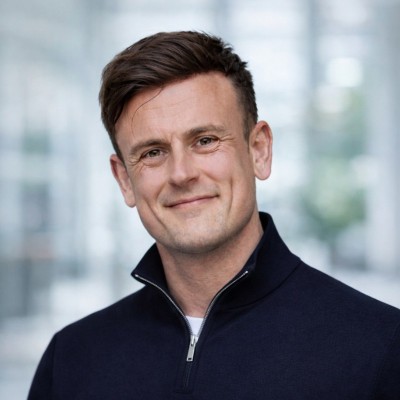
Byron Fitzgerald
Founder, ProGen Search
The global CDMO sector announced approximately $28 billion in new manufacturing capacity between 2021 and 2024. Investors celebrated. Analyst reports projected a glut. Sponsors assumed pricing power was shifting back to buyers.
None of that played out.
What happened instead is a phenomenon we now call ghost capacity. Announced capacity that exists on paper, appears in investor presentations, and shows up in industry databases, but never reaches the point where a commercial sponsor can schedule a batch against it.
This is not a niche observation. Based on data gathered across ProGen Search retained executive search mandates and commissioned intelligence engagements with CDMOs globally, we estimate that roughly 60% of capacity announced since 2021 is not commercially schedulable today. The gap between what was announced and what is available to sponsors is one of the most misunderstood dynamics in the contract manufacturing sector.
Why Capacity Announcements Don't Equal Capacity
There are five structural reasons announced capacity fails to convert into schedulable output.
1. Construction delays and commissioning slippage.
Greenfield CDMO builds routinely run 18 to 36 months behind schedule. This is not news to anyone who has operated in the sector. What is less well understood is the compounding effect: a facility that was supposed to be validated by Q2 2024 but won't pass qualification until Q4 2025 has missed an entire cycle of client onboarding. The capacity exists physically, but the commercial pipeline that was supposed to fill it has moved elsewhere. The clients found other solutions. By the time the facility is ready, it is competing for the next generation of programmes, not the ones it was built for.
2. Qualification and validation backlogs.
Even when a facility is physically complete, the path from construction to GMP-ready production runs through a validation process that most capacity announcements don't account for. Equipment qualification, process validation, cleaning validation, media fills, and environmental monitoring qualification all have to be completed before a single commercial batch can be manufactured. In biologics, this can take 12 to 18 months after the physical build is finished. In radiopharmaceuticals, add radiation safety licensing and NRC oversight. In ADC manufacturing, add HPAPI containment validation. These are not optional steps. They are the difference between a building and a manufacturing facility.
3. Staffing gaps.
This is the constraint we see most directly through our executive search practice. A CDMO can build a 50,000 square foot biologics facility and install $200 million worth of equipment. But without a qualified site head, a VP of quality with FDA inspection experience, an MSAT team capable of executing tech transfers, and a process development group that can handle client-specific campaigns, the facility does not produce anything. The talent shortage in CDMO leadership is acute across every geography we recruit in. Site heads with multi-product biologics experience, quality leaders who have managed regulatory inspections at new facilities, and manufacturing science professionals who can bridge process development and commercial production are in critically short supply.
4. Client-specific capacity locks.
Some announced capacity is technically operational but commercially locked to a single sponsor's programme. Dedicated suites for large-molecule programmes, single-use bioreactor trains allocated to specific clients, and containment facilities built to serve one ADC programme all represent real manufacturing output that is unavailable to the broader market. The capacity exists. It is producing drug substance. But it is not available to any other sponsor, which means it does not relieve the supply constraint that the rest of the market is experiencing.
5. Capability mismatches.
The fastest-growing modalities in pharmaceutical manufacturing are also the most technically demanding. ADC conjugation requires containment infrastructure that most biologics CDMOs do not have. Viral vector manufacturing requires specialist clean-room design and cell-line expertise that standard bioprocessing facilities cannot support. Radiopharmaceutical manufacturing requires hot-cell infrastructure, radiation shielding, and NRC-licensed personnel. Capacity built for one modality cannot easily be repurposed for another. A CDMO that announced 20,000 litres of mammalian cell culture capacity has not helped a sponsor who needs 200-litre scale ADC conjugation with OEB-5 containment.
What This Means for Hiring
The ghost capacity problem is fundamentally a people problem disguised as an infrastructure story.
Every one of these five constraints either is caused by, or can only be solved by, senior leadership talent. Construction delays are management failures. Validation backlogs are quality leadership failures. Staffing gaps are, by definition, hiring failures. Capability mismatches are strategic leadership failures.
The CDMOs that will compound value in this cycle are the ones that recognise that their binding constraint is not capital or equipment. It is the operating leaders who turn physical capacity into commercial output.
We wrote about this dynamic in detail in our 2026 CDMO industry report, Weaponised Capacity, which maps the structural forces reshaping who wins and who quietly fails in contract manufacturing this cycle. You can access it in our premium reports section.
Hiring in This Environment
If you are a CDMO executive team navigating a facility build-out, a capacity expansion, or a site leadership transition, we would welcome a confidential conversation about your talent requirements. ProGen Search runs retained executive searches for site heads, VP Quality, VP Manufacturing, VP MSAT, and other senior leadership roles across the global CDMO sector.
Byron Fitzgerald is the Founder of ProGen Search, a retained executive search and market intelligence firm serving life sciences, radiopharma, CDMO, ADC, and cell and gene therapy sectors.